
Short answer: A jewellery ultrasonic cleaner for home use should be chosen around the exact item, not the word jewellery alone. Bathblack's written listing mentions small jewellery in a capacity bullet, but it gives no compatibility list for metals, gemstones, settings, coatings, adhesives or fluids. GIA warns that not all gems and jewellery can be safely cleaned ultrasonically and identifies treatments, organic gems, coatings and vulnerable settings as concerns. Before use, identify the complete piece, follow its maker's care guidance, seek advice from a qualified jeweller when construction or treatment is uncertain, confirm fit and obtain this cleaner's operating instructions.
Published details relevant to home jewellery cleaning
Bathblack presents the unit as a compact countertop product using USB power in a UK-plug format. The page describes a stainless-steel tank base, mentions small jewellery in a capacity bullet and states capacity as 300 mL or below. It also advertises a 12-month retailer warranty, while leaving item-specific compatibility unconfirmed.
| Detail | What the listing says | Decision boundary |
|---|---|---|
| Marketing category | Small jewellery is mentioned | No individual piece or material is approved |
| Tank | Stainless-steel tank base | Usable internal dimensions are not stated in the written listing |
| Capacity | 300 mL or below | Capacity alone cannot confirm item fit |
| Cover after purchase | 12-month retailer warranty | Warranty does not establish cleaning compatibility |
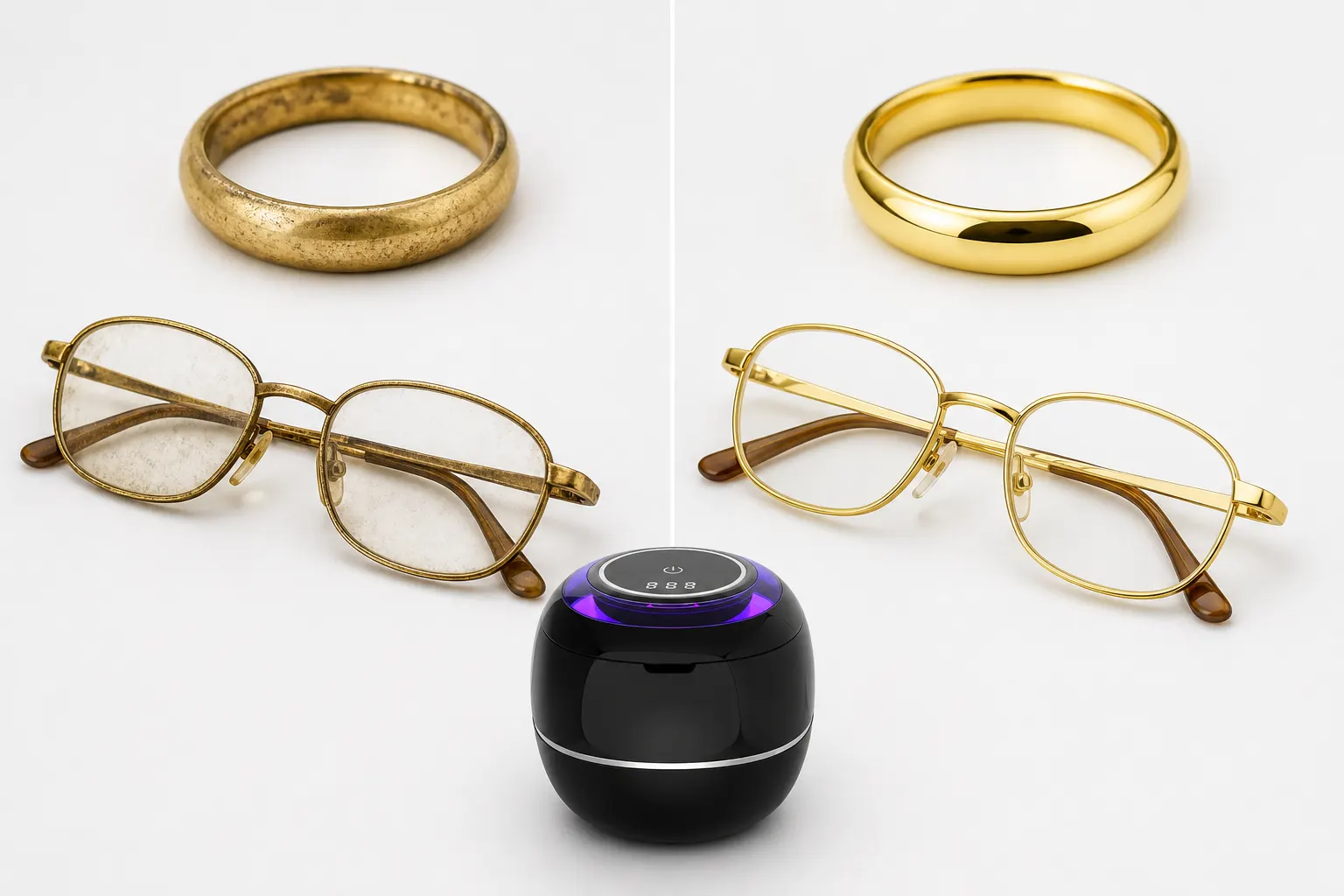
Review the complete piece before using a bath
A product category is broader than a care instruction for one ring, chain or other assembled item. GIA advises caution because ultrasonic vibration can loosen stones or damage vulnerable gems and treatments. Use current care guidance for the complete piece. Where provenance, treatment, setting or construction is uncertain, ask a qualified jeweller instead of guessing from appearance or from the cleaner's general reference to jewellery.
- Identify every material, gemstone, treatment, coating and setting in the assembled piece as far as the documentation allows.
- Check whether the item's maker or a qualified jeweller expressly permits ultrasonic cleaning for that complete piece.
- Confirm that the item will fit within the usable tank dimensions without forcing or overcrowding.
- Obtain this cleaner's operating instructions and confirm the permitted fluid, fill level and process before use; do not proceed if those details remain unavailable.
Separate documented facts from expected performance
The written listing does not state a result standard, contaminant-removal claim or cleaning time. It is therefore not evidence that a particular item will emerge with a particular finish after one cycle. Compare the documented format and capacity with your needs, but keep outcome expectations conditional on confirmed compatibility and available operating instructions.
Limits and checks before buying
The written product listing does not state the ultrasonic frequency, rated power, timer, temperature control, internal tank measurements, approved solution or compatibility by metal, gemstone, treatment, coating, setting or adhesive. GIA specifically says ultrasonic cleaners should not be used for several vulnerable or treated gem categories and warns that vibration can loosen or chip some set stones. Do not use the bath when the complete piece has not been approved for ultrasonic cleaning or when the cleaner's operating details remain unavailable.
Related guides and product details
Consider the Bathblack cleaner only after the jewellery maker permits ultrasonic cleaning and the item's size and care requirements match the documented unit. Read Mini Ultrasonic Cleaner with UK Plug: Buying Checklist for related guidance. Read Glasses Ultrasonic Bath UK: What to Check Before Cleaning for related guidance. Review the documented specification on the Black USB Ultrasonic Cleaner with UK Plug product page before ordering.
Sources and safety context
- Supports the written product format, capacity wording, mentioned item categories and retailer warranty, while showing which compatibility details are not stated in the text Bathblack product page: Black USB Ultrasonic Cleaner with UK Plug.
- Supports the warning that not all gems and jewellery are safe for ultrasonic cleaning and identifies risks involving treatments, vulnerable gem materials and settings GIA: Tips on Caring for Jewelry.